
The opportunity for the Internet of Things (IoT) lies in the maturity of the industry. What are the solution costs and market awareness?
The Internet of Things (IoT)—connecting everything—is familiar to many. Since its formal introduction in 2005, it has been regarded by the industry as the third wave of the global information industry, following computers and mobile internet.
The Internet of Things
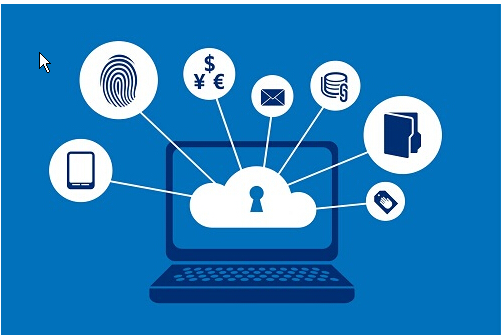
The opportunity for the Internet of Things lies in the maturity of the industry; why are there still doubts about its implementation?
The opportunity lies in the maturity of the industry
After more than a decade of development, the IoT ecosystem has gradually matured from its initial three-layer structure (underlying chips, network architecture, and data platform). Just earlier this month, global chip giant Qualcomm released its latest embedded Snapdragon processors specifically designed for IoT applications: the Snapdragon 410E and Snapdragon 600E series. This is the result of the company’s efforts to develop these processors using its most powerful internal R&D resources.
As Qualcomm stated, the strategic importance of the IoT is as exciting as the mobile market, indicating Qualcomm’s intention to pursue both the consumer and enterprise markets simultaneously.
In fact, the chip giant’s excitement may stem not only from the strategic importance of IoT technology but also from its enormous market value. Data from multiple research institutions shows that the potential value of the Internet of Things (IoT) will reach $15 trillion over the next decade, with some even estimating a market size of $20 trillion. This figure encompasses both the consumer and enterprise markets.
In the consumer market, IoT applications cover areas such as smart wearable devices, mobile communications, and smart homes. Wearable devices launched by major manufacturers like Apple and Lenovo indicate that market acceptance at this level is already quite high.
However, for most people, the impact of enterprise-level IoT development has not yet materialized. Especially in industries closely related to people’s lives, such as manufacturing, retail, and healthcare, the enormous potential value of IoT has not yet been fully realized. Therefore, the industry is increasingly questioning the feasibility of implementing IoT in these areas.
What are the concerns?
These concerns do not stem from the difficulty of technical implementation, but rather from the cost of solutions, market awareness, and actual benefits. In discussions with several domestic IoT solution providers, I learned that although there are no major obstacles to technical implementation itself, many clients in specific industries remain cautious about the cost of IoT technology and its potential to replace traditional solutions.
For example, in logistics and agriculture, chip costs and the price barriers of QR code scanning equipment hinder users, especially in agriculture, where capital investment remains a major obstacle to technological upgrades, in addition to keeping up with changing concepts. In retail, while unmanned supermarkets have rapidly gained popularity in Europe and America due to the adoption of IoT technology, they are few and far between in China. This is because, in terms of shopping habits, supermarket IoT self-service scanning solutions still need time to align with consumer habits. In the smart home sector, device standards remain a major obstacle for unification among various players. Clearly, the implementation of the Internet of Things (IoT) faces numerous challenges. Against this backdrop, truly realizing the value of IoT implementation requires three core supports: First, high-quality information infrastructure platforms and tools are essential. In some niche industries with limited funds, customers can choose to adopt the BT (Build-Transfer) model (joint investment in construction and operation) to achieve large-scale operation and a win-win situation with IT solution providers. Second, IT solution providers can introduce practical technologies and integrate them with IoT solutions, using a point-to-point approach to gradually drive IoT innovation by delivering tangible returns to industry users. Third, promoting successful case studies and impressing users with actual implementation results is crucial.
Currently, in my country’s various industry sectors, numerous IT solution providers are actively expanding into the enterprise-level IoT market through innovative technologies and business models. From BT (Build-Transfer) models to upstream and downstream industry collaborations, they have gained a deep understanding of customer needs and achieved significant breakthroughs in implementation results. For example, solution providers such as Digital China, Baoxun Technology, and Xindi Technology have launched industry-customized IoT solutions, encouraging industry clients to increase their investment in IoT in terms of cost, efficiency, and operations. Finally, solution providers are optimistic about the cost and standards of IoT. They believe that once the industry achieves economies of scale, hardware costs will inevitably decrease.